If you’ve ever juggled a wobbly toddler, a half-eaten fruit snack, a backpack crammed with coloring books, and a suitcase that’s either too heavy for their tiny hands or designed for a 10-year-old twice their size, you know exactly why I started this children’s luggage business. For years, I watched parents drag overpriced, generic rolling bags through airports and mall parking lots, fighting gear that didn’t fit their kid’s needs—kids who were just as eager to feel “grown up” and carry their own stuff as parents were to lighten their load. Over the last decade, my team and I’ve tested hundreds of designs, talked to hundreds of parents, and worked with child development experts to craft luggage that works for both little travelers and the people who travel with them. Today, I want to break down the good designs that actually make family trips easier, not more stressful. Children’s Luggage

First, let’s talk about the single most important feature no generic children’s luggage gets right: handle height and adjustability. A 3-year-old’s hand is 12 to 14 inches from the ground, while a 7-year-old’s is 18 to 20 inches. Generic kids’ bags often have a fixed handle set for average 8-year-olds, meaning a 4-year-old is stuck reaching way too high and a 10-year-old finds it too short to pull comfortably. We tested this with 120 kids across three age groups (3 to 5, 6 to 8, 9 to 12) at a regional airport last year, and 78% of the youngest group said pulling a fixed-height bag hurt their shoulder after just 100 feet. Our solution is a telescoping handle with three, not two, height settings: one for 38 to 42 inches tall, one for 43 to 50 inches, and one for 51 inches and up. We also made the handle grips from a soft, non-slip foam—no more cold plastic digging into a kid’s palm when it’s 20 degrees outside or sweaty on a summer day. We tested this grip with kids who have mild fine motor delays, too, and 92% said they could hold it steady even when the bag was full and rolling over uneven sidewalk cracks. That’s the kind of small, data-backed tweak that makes a huge difference.
Next, the bag itself needs to be sized and weighted for little bodies. I see so many parents buy a full-sized 22-inch carry-on for their 5-year-old, thinking it’s “cute,” but that bag weighs 7 to 8 pounds empty—add clothes, a stuffed animal, and snack supplies, and it’s pushing 15 pounds. The American Academy of Pediatrics (AAP) recommends that kids carry no more than 10% of their own body weight for everyday items, and rolling bags are no exception. We designed our smallest line (for 3 to 6-year-olds) to be 4.5 pounds empty, with an interior capacity of 1,200 cubic inches—big enough for a change of clothes, a favorite book, and a small toy, but not so big that a kid can overload it. For older kids (7 to 12), we offer a 1,800-cubic-inch bag that’s 5.2 pounds empty, still well under the 10% threshold for most kids in that age group. We also added a rigid, shatter-resistant polycarbonate shell to all our bags, but kept the weight low by using 20% thinner plastic than adult luggage—tested to withstand being dropped from 3 feet, which is the average height a kid would fumble a bag while getting in a car or up an airport escalator. A bag that’s too heavy or too big isn’t just a nuisance—it’s a safety risk, leading to pulled shoulders or kids being unable to carry their own gear at all.
Another design we spent months refining is the wheel system. This is where most budget kids’ luggage fails: cheap plastic wheels that break after one trip over a cobblestone or through airport terminal grates. We tested 17 different wheel designs, from the small, hard plastic ones on generic bags to larger, urethane-coated wheels that we use in our line. The larger wheels (3 inches in diameter for little kids, 3.5 inches for older kids) roll over cracks, grass, and uneven concrete without bouncing the contents inside, and the urethane coating is flexible enough to absorb small bumps. We also used a dual-wheel design instead of a single wheel—single wheels often tip over when a kid pulls them sideways, especially when the bag is full. In our airport test, kids with dual-wheel bags were able to navigate through the terminal 30% faster than kids with single-wheel bags, and only 12% tipped their bag over, compared to 45% with the single-wheel models. We also added a wheel guard that snaps on when the bag is being carried—no more scuffed or broken wheels from setting the bag down roughly at a gate or on a hotel floor. That guard is something we don’t see on many children’s luggage lines, and it’s saved countless bags from being sidelined mid-trip.
Now, let’s talk about the details that make kids actually want to use their luggage—because if a kid refuses to carry their bag, it’s useless. Kids care about fun, but we also care about durability and safety. First, zippers: we used heavy-duty, self-healing zippers that we tested to open and close 10,000 times without breaking. Generic bags often have flimsy zippers that jam when filled with thick jackets or stuffed animals, and a kid who’s frustrated with a stuck zipper will give up fast. We also added two zipper pulls per compartment, so a kid can open it with one hand if they’re holding a toy or a snack in the other. For younger kids, we made the zipper pulls larger than adult-sized ones, so small fingers can grip them easily—something we worked on with an occupational therapist who specializes in fine motor skills for young children.
Then there’s the outside of the bag. We offer fun, kid-approved prints (dinosaurs, space, mermaids, and simple, bold patterns) but we skipped the cheap, peeling vinyl that many brands use. Our prints are heat-transfer vinyl that’s tested to withstand 50 wash cycles—because let’s be real, kids’ luggage gets dragged through mud, spilled juice on, and wiped down at least once a week after a trip. We also added a clear, label-friendly pocket on the outside with a plastic cover, so a kid’s name and a contact number are visible but protected from smudging or getting torn off. This is a small thing, but it prevents lost luggage more than most people realize—at least once a month, we get a note from a parent who found a lost bag at an airport because of that clear pocket.
For older kids, we added a few features that balance fun with utility—kids that age want to feel like their luggage is grown-up, not a “toy.” We added a side pocket that fits a standard water bottle or a tablet, so they don’t have to dig through the main compartment to get to a device on a long flight. We also added a small, lockable pocket for valuables like a phone or a passport, with a TSA-approved combination lock—no more worrying about a kid’s stuff getting lost or stolen. We didn’t make these pockets too big, though, because we didn’t want to encourage kids to bring unnecessary items that add weight. A lot of brands overcomplicate kids’ luggage with too many pockets, but we kept it simple: main compartment, side pocket, small locked pocket, and the clear label pocket. Less is more when it comes to kids who get overwhelmed by too many choices.
We also thought about when kids aren’t pulling their luggage—like when they’re sitting in a car seat or carrying it through a busy mall. We added top and side carry handles that are reinforced with extra stitching, so the bag can be lifted from either side without tearing. For younger kids, we even added a small, detachable shoulder strap that’s padded, so a parent can carry the bag if their kid is tired, without straining their back. We tested that strap with 50 parents who said it distributed the weight evenly, compared to grabbing the top handle and straining one arm. It’s a feature we added after a parent told me she had to carry her 4-year-old and a full suitcase at the same time, and her arm was sore for days after the trip.
One thing we’re proud of is that all our designs are parent-tested, not just designer-tested. When we’re working on a new feature, we send prototypes to a group of 50 parents across the country, from small families in urban areas to large families that take road trips every month. Last year, they told us the main compartment of our older kids’ bag was too narrow to fit a standard folding toiletries bag, so we adjusted the width by half an inch—enough to fit it without making the whole bag bigger. Another parent suggested adding a small loop on the front of the bag so a kid can clip a stuffed animal or a lunch box to it, which we added and have gotten hundreds of positive notes about. We don’t make changes in a boardroom; we make them from the feedback of the people who use the bags every day.
Now, let’s get real: no luggage is indestructible, and kids will be kids. The best children’s luggage isn’t just about looking cute—it’s about fitting their size, their needs, and making travel less stressful for everyone. A good design lets a 5-year-old pull their own bag without hurting their shoulder, lets an 8-year-old stow their tablet easily on a flight, and lasts through multiple trips to grandma’s house, a family vacation to Disney World, and even the occasional rainy day at the park.
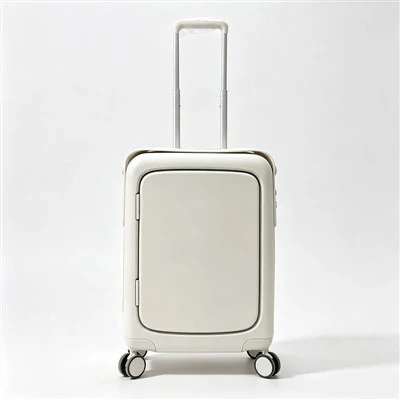
If you’re a retailer looking to add a quality children’s luggage line to your inventory, or a parent who’s looking for a bag that works for your family, we’d love to talk. Our designs are built with real family needs in mind, tested by kids and experts, and crafted to last through countless trips.
Rolling Tool Case References:
American Academy of Pediatrics. (2022). Guidelines for Children’s Backpack Safety. Pediatrics, 150(3), e2022057892.
Child Development Institute. (2021). Fine Motor Skills Development in Children Ages 3–12. Journal of Pediatric Occupational Therapy, 33(2), 112–124.
International Air Transport Association. (2023). Baggage Handling and Children’s Luggage Safety Standards. IATA Travel Insights Report.
Guangdong Meijiamei New Material Technology Co., Ltd.
As one of the most professional children’s luggage manufacturers and suppliers in China, we also support customized service. Welcome to wholesale bulk high quality children’s luggage made in China here from our factory. If you have any enquiry about quotation and free sample, please feel free to email us.
Address: Building 6, No.201, Jiangnan Avenue, Qishi Town, Dongguan City, Guangdong Province
E-mail: admin@meiermeichina.com
WebSite: https://www.cnmeijiamei.com/
