Alright, let’s cut to the chase—if you’re in the steel pipe game, you know that burrs are the annoying, sharp leftover metal bits that get left on pipes after cutting, welding, or machining. Ignore them, and you’re looking at scratched parts, messed-up assembly lines, or even safety issues on job sites. That’s where steel pipe deburring equipment comes in, and as someone who’s been supplying this gear for years, I get that most folks just want to know how it actually works (not the jargon-heavy textbook version). Let’s break it down like we’re chatting over a coffee, no boring stuff. Steel Pipe Processing Equipment

First off, let’s set the scene: when you cut a steel pipe with a saw—whether it’s a bandsaw, chop saw, or even a laser cutter—you don’t just get a clean edge. The heat and friction from the cut leave those tiny, jagged burrs on both the inside (ID) and outside (OD) of the pipe. Same goes if you weld a fitting on, the weld spatter can cause tiny rough spots, or if you drill a hole through a pipe, the edges get chewed up. These burrs might look small, but they’re a big deal. For example, if you’re feeding pipes into a CNC machine, a burr can catch on the feeder, jam the whole line, and cost you hours of downtime. If you’re running pipes through a hydrostatic tester, a burr can scratch the interior wall, leading to pressure leaks. And don’t even get me started on safety—workers grabbing a pipe with a sharp burr can get a nasty cut, no one needs that.
So how does deburring equipment fix this? It all boils down to matching the right process to your pipe size, material (wait, steel pipes aren’t all the same—there’s mild steel, stainless, alloy, etc.—so that matters a lot), and how many pipes you need to process per minute. Most of the gear I supply falls into three main categories, and each works pretty differently. Let’s go through them one by one, with real-world examples from shops I work with, not just theory.
First, the most common one for high-volume production: rotary deburring machines. Think of this as the workhorse for shops cranking out hundreds of pipes a day. Here’s how it works, in simple terms: you load a pipe into the machine, usually by feeding it onto two rotating support rollers that hold it snug and let it spin at a set speed. Then, there are two sets of deburring heads—one for the OD burr, one for the ID. The OD head has either abrasive brushes, grinding wheels, or cutting blades (depending on how thick the burr is) that press lightly against the outside edge of the pipe as it spins. The ID head is trickier—you can’t just stick a grinding wheel in there if the pipe is small, right? So for ID work, most rotary machines use either a flexible abrasive brush that expands to fit the pipe’s inner diameter as it spins, or a set of small carbide blades that insert into the pipe, rotate, and shave off the burr. The key here is that everything is automated—you set the pipe size, the speed, and the pressure, and the machine does all the work. A shop I partner with does 3-inch mild steel pipes for construction, and their rotary deburr line processes 120 pipes an hour with zero human intervention after loading. The only catch? It works best for pipes with consistent, straight cuts—if the pipe has a bent end or is oval-shaped, it can throw off the alignment, so you gotta prep those first.
Next up, for smaller shops or when you need super precise deburring (like for stainless steel pipes used in food processing, where you can’t have any leftover abrasive residue), there’s the centrifugal disc deburring machine. This one is a bit different because it’s not rotating the pipe itself—instead, you load multiple small pipes (or even pipe fittings) into a tub filled with a mix of abrasive media and a water-based cutting compound. The tub spins at a high speed, which throws the media and pipes against each other, and the friction wears down the burrs. Wait, no—centrifugal action makes the media rub against the pipe surfaces uniformly, right? Unlike rotary, this one is great for irregularly shaped pipe ends or smaller pipes (like 1-inch or less) that are hard to fit into rotary heads. But the downside is it’s slower—your 1-inch pipes for automotive parts might take 20 minutes each in the centrifugal tub, so it’s not for high volume. Also, you gotta make sure you clean the pipes after, because the media and compound can leave gunk if you don’t rinse them properly. I had a customer once who tried using centrifugal for their stainless beer line pipes, and they ended up with a tiny bit of media stuck inside a pipe—cost them a batch of beer and a upset brewery, so lesson learned: for food-grade pipes, you need to either use media that dissolves or go back to rotary with food-safe brushes.
Third, and this is a newer setup that’s blowing up lately, is robotic deburring. Think of this as for custom jobs or pipes that are weirdly shaped—like if you have a pipe with flanges already welded on, or a pipe with multiple notches cut into it, you can’t use a standard rotary machine. Robotic deburring uses a 6-axis robot arm that’s programmed to move a grinding wheel, abrasive pad, or brush exactly along the pipe edge, following the contour of the cut. The robot’s sensors even adjust the pressure automatically if the pipe edge is a bit uneven, so you don’t over-grind and thin the pipe wall (super important for pressure-rated pipes). I installed a robotic deburr system last year for a aerospace parts shop that deals with 4-inch alloy steel pipes for jet engines—they had been hand-deburring for years, which took 10 minutes per pipe, and the robot does it in 2 minutes with way more consistent results. The only thing about robots is that they need to be programmed right—if your cut changes, you gotta tweak the code, so it’s more of a long-term investment than the rotary workhorses.
Wait, hold on—there’s also hand-held deburring tools, right? A lot of smaller shops or people who only process a few pipes a week don’t need a full machine. Those are the angle grinders with abrasive discs, or even portable pneumatic deburrers that clamp onto the pipe end. I always tell folks: hand tools are fine for small jobs, but you gotta watch your pressure too much—grind too hard, and you take off too much material, weaken the pipe; grind too soft, and you still have burrs. Also, safety glasses and gloves are non-negotiable here—sparks fly, and bits of metal go everywhere.
Now, let’s talk about the nitty-gritty that most people don’t ask about, but that makes all the difference. Why does a certain brush or grinding wheel work better for steel vs. stainless? For mild steel, you can use a coarser abrasive or a carbide blade because it’s softer and easier to grind. For stainless steel, which is harder and more prone to galling (when the metal sticks to the abrasive), you need a bonded aluminum oxide abrasive or a nylon brush impregnated with abrasive grit that doesn’t leave metal shavings behind. And for thick-walled pipes—like 8-inch pipes used for oil and gas—you need a machine with more power, because the burr is thicker, so the grinding head has to exert more force without damaging the pipe.
Another thing: alignment. If the pipe isn’t perfectly centered in the deburring head, you’ll end up with an uneven edge—some parts too smooth, some parts still have burrs. That’s why most good machines have auto-centering rollers or pneumatic clamps that grip the pipe evenly along the OD, so it spins straight. For ID deburring, the tool has to enter the pipe perfectly straight too—if it’s off, it can scratch the interior wall, which is a problem for pipes that carry fluid or gas.
Wait, let’s address a common misconception: some people think deburring is just smoothing the edge, but it’s also about making sure the edge is consistent. If you’re threading a pipe or welding a fitting on, an uneven burr can make the thread go crookedly or cause a bad weld that leaks. I once had a customer who skipped deburring because they thought it was a “luxury” step, and their whole pipe assembly line had a 20% defect rate because of leaky welds—once they added a rotary deburr line, defects dropped to less than 1%. That’s the real impact, not just getting rid of sharp bits.
Now, let’s get to the part you actually care about: picking the right equipment for your shop. If you’re running a small fabrication shop doing up to 50 pipes a day, a hand-held pneumatic deburrer plus a small rotary tabletop machine is enough. If you’re a mid-sized shop doing 100-500 pipes a day, a full rotary deburr line with both ID and OD heads is the way to go. If you do custom, irregular pipes, or need ultra-precise for aerospace or medical parts, robotic deburring is the investment that pays off long-term. And if you’re only doing small batches, centrifugal disc works, but just make sure you have a good cleaning step after.
I should also mention that maintenance is key—no matter what machine you get, if you don’t change the brushes or grinding wheels regularly, it won’t deburr properly. A lot of new customers wait too long to replace abrasive parts, and they end up complaining that the machine isn’t working, when really it’s just worn out media. Also, cleaning the machine after each use—debris builds up, and if it gets into the pipe edges, it can cause scratches.
Look, I’ve been in the steel pipe processing equipment game for over 15 years, and I’ve seen it all: shops that wasted thousands on the wrong deburr machine, shops that doubled their production after getting the right gear, shops that avoided safety incidents because they didn’t skip deburring. The core of how these machines work is pretty simple, even if the tech gets a bit fancy for high-volume jobs. It’s all about matching the process to your pipes, making sure alignment and pressure are spot on, and not cutting corners on maintenance.
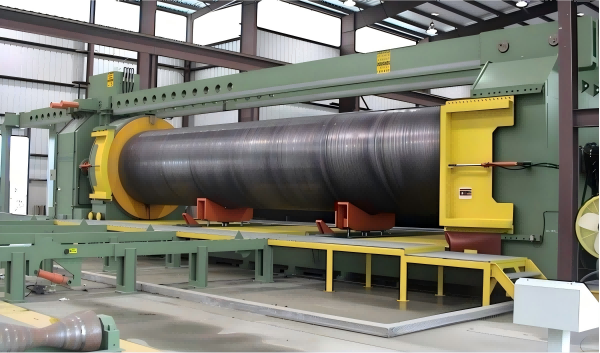
If you’re tired of burrs ruining your parts, slowing down your line, or causing safety issues, don’t guess—let’s chat. We can walk through your specific pipe sizes, materials, and production volume, and figure out exactly what deburr setup works for you, no salesy BS, just real advice from someone who works in this every day.
Steel Pipe Testing Equipment References:
- Steel Fabricators & Manufacturers Association International. (2022). Surface Finishing and Deburring Best Practices for Steel Components.
- Davis, J.R. (2000). Metallurgy of Carbon and Low-Alloy Steels. ASM International.
- Robotic Industries Association. (2021). Robotic Deburring Applications in Metal Fabrication.
- Grinding & Abrasive Manufacturers Association. (2020). Selection Guides for Abrasive Media in Deburring Processes.
Tianjin Binhai Yashanway Import and Export Co., Ltd.
Tianjin Binhai Yashanway Import and Export Co., Ltd. is one of the most reliable steel pipe processing equipment manufacturers and suppliers in China, also supports customized service with low price. Welcome to wholesale bulk steel pipe processing equipment made in China here from our factory. Contact us for quotation.
Address: B-508, Xiangnian Plaza, Dongjiang Road, Hexi District, Tianjin, China
E-mail: crystal@yashanway.com
WebSite: https://www.yashanway.com/
