In the realm of art, minimalist art has emerged as a powerful and influential movement, captivating artists and enthusiasts alike with its simplicity, clean lines, and profound message. As a tracing paper supplier deeply entrenched in the art materials industry, I often find myself contemplating the intersection of our product and various art forms, including the ever – popular minimalist art. This blog aims to explore the question: Can tracing paper be used for tracing minimalist art? Tracing Paper
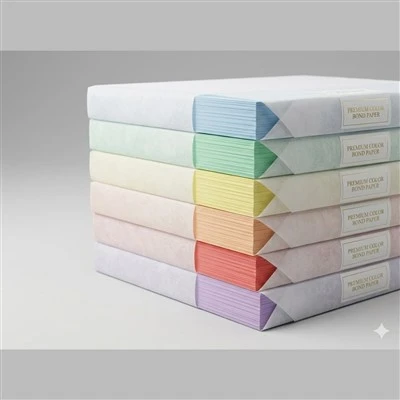
Understanding Tracing Paper and Its Properties
Tracing paper is a semi – transparent paper that allows the user to see an image underneath it. This makes it an indispensable tool for various artistic purposes, from transferring sketches to adding detailed layers in a drawing. The main properties that set tracing paper apart are its translucency, flexibility, and relatively smooth surface.
The translucency of tracing paper is its most significant feature. It is manufactured to be just opaque enough to take pencil, ink, or other drawing mediums easily but still allow light to pass through, enabling the artist to see the original design beneath. This feature is particularly useful when an artist wants to replicate a design accurately, save time on redrawing, or create multiple copies of the same image.
Flexibility is another key aspect. Tracing paper can be easily folded, rolled, or manipulated without tearing, which means it can be used in different environments and setups. Whether you are working on a large – scale project on a wall or a small, detailed piece on a tabletop, tracing paper can adapt to your needs.
The smooth surface of tracing paper provides a great medium for drawing. It allows for consistent application of graphite, ink, or colored pencils, and the ink does not bleed through as it might on some other types of paper, making it suitable for fine – line drawing and detailed work.
Characteristics of Minimalist Art
Minimalist art is characterized by simplicity, reduction, and the elimination of non – essential elements. It emerged in the 1960s as a reaction against the complex and expressive nature of abstract expressionism. Instead of using elaborate colors, textures, and forms, minimalist art focuses on the essentials, such as shape, color, and space.
In minimalist art, geometric shapes often play a central role. Squares, circles, rectangles, and triangles are commonly used to create compositions that are both visually striking and conceptually pure. The use of negative space is also a defining characteristic. By leaving areas of the canvas or paper empty, the artist creates a sense of balance and tranquility, allowing the viewer to focus on the essential elements of the piece.
Color in minimalist art is typically used sparingly. Monochromatic palettes, often consisting of black, white, and gray, are very common. When other colors are used, they are usually bold and simple, serving to emphasize specific shapes or add a touch of contrast to the overall composition.
How Tracing Paper Can Be Used for Tracing Minimalist Art
Replicating and Adapting Designs
One of the most straightforward ways tracing paper can be used in the context of minimalist art is for replicating and adapting existing designs. Since minimalist art often relies on simple geometric shapes and clean lines, it is relatively easy to trace these elements onto tracing paper.
For example, if an artist has a sketch of a minimalist composition made up of squares and rectangles, they can place the tracing paper over the sketch and trace the shapes accurately. This is especially useful when the artist wants to create multiple copies of the same design, perhaps as part of a large – scale installation or a set of prints.
Moreover, tracing paper allows the artist to make changes to the design easily. After tracing the original sketch, the artist can modify the size, position, or orientation of the shapes by simply redrawing on the tracing paper. This flexibility is a great advantage, as it enables the artist to experiment with different compositions without having to start from scratch each time.
Creating Layering Effects
Layering is a common technique in minimalist art, used to add depth and complexity to an otherwise simple composition. Tracing paper is an ideal tool for creating layering effects.
An artist can trace different elements of a minimalist design onto separate sheets of tracing paper. For instance, one sheet might have the main geometric shapes, while another could have smaller details or a secondary color layer. By overlaying these sheets in different combinations, the artist can create a variety of visual effects.
The semi – transparent nature of tracing paper allows the underlying layers to show through, creating a sense of depth and dimensionality. This is particularly effective in minimalist art, where the use of negative space and the contrast between different elements are crucial.
Preserving Sketch Ideas
Minimalist art often starts with a simple sketch. Tracing paper can be used to preserve these initial sketch ideas. Artists can trace their rough sketches onto tracing paper, which not only protects the original sketch from getting smudged or damaged but also allows them to work on the design further.
The tracing can be used as a reference when the artist is ready to transfer the design onto a final canvas or paper. It also serves as a record of the creative process, showing how the initial idea evolved over time.
Advantages of Using Tracing Paper for Tracing Minimalist Art
Precision and Accuracy
Minimalist art demands precision and accuracy. With its ability to allow the artist to see the original image clearly, tracing paper ensures that the shapes and lines are replicated exactly as intended. This is crucial in minimalist art, where even the slightest deviation from the intended design can disrupt the overall balance and harmony of the composition.
Time – Saving
Creating a minimalist art piece from scratch can be time – consuming, especially when it comes to drawing multiple identical shapes or achieving a high level of precision. Tracing paper significantly reduces the time required for these tasks. Artists can trace the basic shapes once and then use the tracing as a template, saving time and effort in the long run.
Versatility
Tracing paper can be used in combination with a variety of art mediums, such as pencils, pens, markers, and even watercolors. This makes it a versatile tool for minimalist artists, who can experiment with different techniques and materials to achieve their desired effect.
Potential Challenges and How to Overcome Them
Ghosting and Transfer Marks
One potential challenge when using tracing paper is the issue of ghosting and transfer marks. When the tracing paper is in contact with another surface for an extended period, some of the graphite or ink from the tracing may transfer to the underlying paper.
To overcome this, artists can place a layer of clean paper between the tracing paper and the final surface. They can also use fixatives to set the drawing on the tracing paper before transferring it.
Limited Durability
Tracing paper is not as durable as some other types of paper. It can tear easily, especially if it is folded or manipulated too much. To address this, artists should handle the tracing paper carefully and consider using heavier – weight tracing paper for more robust projects.
Conclusion
In conclusion, tracing paper can be an incredibly valuable tool for tracing minimalist art. Its unique properties, such as translucency, flexibility, and smooth surface, make it well – suited for replicating, adapting, and enhancing minimalist designs. Whether you are a professional artist, an art student, or someone who simply enjoys creating art in their free time, tracing paper can help you achieve greater precision, save time, and explore new creative possibilities in the world of minimalist art.
Art Paper If you are interested in exploring the potential of tracing paper for your minimalist art projects, I invite you to reach out for a discussion. We can talk about the different types of tracing paper we offer, their specific properties, and how they can best meet your artistic needs. Let’s start a conversation about how our tracing paper can elevate your minimalist art to the next level.
References
- Greenberg, Clement. "Modernist Painting." 1960.
- Smithson, Robert. "The Non – Site." 1968.
- LeWitt, Sol. "Paragraphs on Conceptual Art." 1967.
Dongguan Banyan Material Co., Ltd.
We are one of the most experienced tracing paper manufacturers and suppliers in China, also support customized service. Please feel free to wholesale bulk eco-friendly tracing paper from our factory. Quality products and reasonable price are available.
Address: NO.167, Meijing West Road, Songmushan, Dalang Town, Dongguan City, Guangdong Province, China
E-mail: Sales_chris@yspaper.com
WebSite: https://www.paperyoung.com/
