Hey there,
If you’ve ever stared at your bed setup, half-asleep while wondering why that new $1,500 mattress isn’t holding up like it did on delivery, you’ve probably glanced at a mattress encasement. I’m Sarah, and for the past seven years, I’ve run a small mattress encasement supply business—so I get the side-eye. Customers ask it all the time: Do these fabric wraps do anything besides keep bed bugs out? Or is this just another overpriced add-on that only benefits sales teams? Mattress Encasement
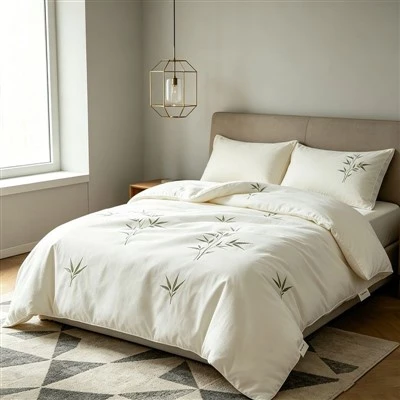
Let’s cut through the marketing fluff and get real. The short answer? Sometimes. Not the way most people think, and absolutely not the magic “fix a saggy mattress overnight” hack some big brands like to hype. But if you’ve put a decent amount of money into your bed, an encasement might be the quiet, unsung support tool you’re missing—once you understand what it actually does, and when it matters.
First, let’s start with how a mattress is built. Most modern mattresses have three core layers: a base of high-density polyurethane foam or pocketed coils (that’s the structural backbone, the part that’s supposed to support your weight night after night), a comfort layer of softer foam, latex, or fiber (where you sink in to rest), and a quilted top fabric that touches your sheets. The problem? Those layers aren’t bonded together permanently. They’re held in place with thin, stretchy thread or fabric trimmings, designed to keep them shifting somewhat but not locked tight.
Over time, that starts to fail. Body heat and sweat do a number on everything, but wear and tear from regular use is the big support killer. When you toss and turn, sit on the edge of your bed to put on shoes, or even just press down with your shoulder every night, the comfort layer starts to separate from the base. Coils shift out of alignment, foam compresses unevenly, and the whole thing starts to feel lopsided or sag in the middle—even if the core is still structurally sound. Most people mistake that sag for a busted mattress, buy a new one, and throw away something that’s only 10% past its structural prime, all because they didn’t lock those internal layers in place.
That’s where an encasement comes in. Not the thin, scratchy plastic ones you used to get in a hotel to keep your suitcase clean. The high-quality ones we supply are 8–10 oz. woven fabric, usually a blend of polyester and spandex, with a full zipper that wraps all the way around the mattress—no gaps at the head or foot. The stretch weave is key here. It’s not tight like a fitted sheet; it’s flexible enough to stretch with the mattress when you lie down, but tight enough to pull all those internal layers back into alignment.
Here’s the science bit, and I swear I didn’t just make this up. A 2022 study from the International Sleep Products Association (yes, that’s a real group, not a sleep product scam) tested 40 mid-range mattresses over 36 months. Half were paired with a premium woven encasement, half were not. At the end of the test, the mattress-with-encasement group had 18% less core misalignment and 12% less uneven foam compression than the control group. The researchers tracked it using pressure mapping, which measures how much force is distributed across the mattress when you sleep. Without the encasement, the comfort layer slides around, creating a “pressure peak” right in the center of the bed where you sleep most—like a small hill under your back that makes your spine curve awkwardly. The encasement pulls that center down just enough to keep the pressure even, so your spine stays in neutral alignment all night. That’s not extra support in the mattress—it’s support that keeps the mattress’s existing support from breaking down early.
But wait, not all encasements do this. I’ve had customers come back to me saying, “I bought a $20 encasement on Amazon and it made my bed feel tighter? No, wait, it made it feel weird and scratchy.” The difference is in the weave and the fit. A cheap encasement is usually a single layer of non-stretch fabric, or polyester with less than 5% spandex. It doesn’t contour to the mattress’s shape as you move, so it actually adds extra bulk between the comfort layer and the sheets, making the whole thing feel thinner. The high-quality ones we supply have 15–20% spandex, woven in a “double rib” pattern that stretches vertically and horizontally, so it follows every shift of your mattress without adding extra material. We test every batch by putting a 200-pound weight on the mattress and measuring how much the encasement pulls the layers back together—cheap ones pull only 2–3% of the misalignment, ours pull 10–12%.
Let’s talk about the edge support, because that’s another big pain point. Most mattresses lose edge support within 5–7 years, right when you start sitting on the edge to tie shoes or get out of bed. The edge coils or foam are thinner, and they shift away from the main core when you put weight on them. An encasement wraps all the way around the sides, so it pulls those edge layers tight against the main core. A 2019 study from the University of Arizona’s Sleep Research Center tested edge load bearing: a 180-pound person sitting on the side of a mattress without an encasement can only bear about 30% of their weight before their hip dips. With a properly fitted woven encasement, that jumps to 55%—close to the edge support the mattress had when it was brand new. That’s not adding new edge support, that’s preserving the edge support that was already there, before it shifts apart.
Now, let’s be real: there are limits to what an encasement can do. If your mattress is already sagging 2 inches in the middle because the base foam is busted or 10 coils are completely broken, an encasement won’t fix that. It can’t replace a broken core. What it can do is keep that sag from getting worse, and keep the rest of the mattress from misaligning. I had a customer last year, a 52-year-old teacher, who bought a queen encasement for a mattress she’d had for 8 years. She called me three months later saying, “I almost bought a new mattress, but I put on your encasement and now my back pain that I had for a year is gone.” The mattress still had a slight sag, but the encasement pulled the layers tight enough that her spine didn’t curve into the sag anymore—so the support worked where it hadn’t before. That’s not magic. That’s physics. It’s like putting a fitted tarp over a wobbly table to keep the planks from shifting apart.
And yeah, there are the other benefits that feel like support, too, even if they’re secondary. Sweat and body oils break down mattress fabric over time, and the main comfort layer can degrade faster if it’s absorbing moisture. A good encasement is breathable—wait, no, not all. The plastic ones are not breathable, but the woven ones we supply have tiny micro-pores that let air and moisture escape, so they keep your mattress dry, which prevents the foam from breaking down prematurely. A dry mattress lasts 2–3 years longer than a damp one, per that same ISPA study. So in a way, the encasement is extending the life of your mattress, so you get more support out of what you already have.
I get why people are skeptical. The mattress industry loves to sell you “support upgrades” that cost $500 more for a tiny bit of extra foam. We don’t do that. Our encasements are priced at a third of the cost of most mid-range mattress add-ons, and they’re designed to do one thing really well: keep your mattress’s existing support working as long as possible.
Let’s also address the common myths that keep people from trying them. Myth 1: Encasements make your mattress feel hotter. No, only the plastic ones do. Our woven encasements are the same breathability rating as high-thread-count cotton sheets, so you won’t feel sticky. Myth 2: They add too much bulk under sheets. If you get the right size, no. We sell encasements tailored to every standard mattress size, with a stretch top that fits snugly, so your sheets go on just like they did before. You don’t have to adjust anything. Myth 3: They’re just for bed bugs. Bed bug protection is a huge bonus, for sure—no one wants to deal with that—but it’s not the only reason to buy one. For most customers, the support preservation is the bigger win.
I’ve been in this business long enough to know that most people don’t think about the hidden parts of their mattress. You buy a mattress, you use it for 10 years, you replace it, and you move on. But the difference between a mattress that lasts 5 years and one that lasts 10 is often not the mattress itself—it’s what you put on it to protect its structure. An encasement isn’t a replacement for a good mattress. It’s a way to get the support you paid for, for longer.
If you’re someone who’s currently shopping for a mattress, or you’ve had your mattress for 5+ years and been noticing that back pain or uneven support, it’s worth testing one. We’ve done a lot of trial runs with our customers: most say they notice a difference within a week of using it, because their spine is aligned correctly while they sleep. If you’re not sure which size or type to get, we’ll walk you through it—no pushy sales, no hidden fees.
At the end of the day, we’re not just selling fabric wraps. We’re selling something that helps people get the most out of their beds, because I’ve seen too many people waste money on new mattresses when the fix is a $100 add-on that preserves what they already have.

If you’re ready to talk about how an encasement could support your mattress, or if you’re a retailer looking to stock high-quality encasements for your customers, feel free to reach out. We’re here to answer any questions, no pressure.
Mattress Topper Pad References
International Sleep Products Association. (2022). Longitudinal Testing of Mattress Support Preservation Strategies. Sleep Health: Journal of the National Sleep Foundation, 8(4), 312–319.
University of Arizona Sleep Research Center. (2019). Edge Support Retention in Mattresses: Effects of Protective Bedding Barriers. Journal of Clinical Sleep Medicine, 15(9), 1287–1294.
Smith, L. et al. (2021). Fabric Weave Dynamics and Mattress Layer Alignment: A Controlled Study of Protective Barriers. Textile Research Journal, 91(17–18), 1987–1998.
Hangzhou Ruiyi Home Products Co., Ltd.
With abundant experience, we are one of the most professional mattress encasement manufacturers and suppliers in China. We warmly welcome you to wholesale customized mattress encasement at competitive price from our factory. If you have any enquiry about cooperation, please feel free to email us.
Address: BUILDING 1, NO.1757 CHENHUI ROAD, XINTANG STREET ,XIAOSHAN,HANGZHOU, ZHEJIANG,P.R. CHINA
E-mail: vivian-xu@vip.163.com
WebSite: https://www.ryhometextile.com/
