If you’ve ever stood in a hospital emergency department at 2 a.m.—the beep of monitors, the hum of life support, the quiet urgency of medical teams working to save a life—you don’t need to be told how vital consistent power is. A single outage, even for a few minutes, can put patients in intensive care, those on ventilators, or anyone relying on critical medical equipment at fatal risk. For years, hospitals relied on diesel generators as their backup power safety net, but those systems are messy, expensive, and vulnerable to their own failures. As a solar energy storage system supplier who’s worked with more than a dozen U.S. hospitals over the last five years, I get asked one question more than any other: Can solar energy storage actually hold up when a hospital needs it most? The short answer is yes, and it’s not just a solution for grid emergencies—it’s a way to cut long-term costs and shrink a facility’s carbon footprint at the same time. Solar Energy Storage System

Let’s start with the hard data, because hospitals can’t afford to cut corners on performance. In 2022, the U.S. Energy Information Administration reported that commercial and industrial facilities make up 22% of total U.S. electricity use, and hospitals are among the biggest contributors to that number, clocking in at a staggering 2.5 times more energy use per square foot than the average office building. That’s because hospitals run 24/7, 365 days a year. Operating rooms aren’t scheduled to close for solar panel maintenance. Neonatal intensive care units (NICUs) don’t pause to wait for better weather. And when the grid drops, there’s no “plan B.” That’s where modern solar energy storage systems come in—not the clunky, old-school battery banks you might picture in a basement, but lithium-iron-phosphate (LFP) batteries, the same technology used in electric buses and grid-scale projects, that are designed for consistent, heavy-duty use.
In 2021, we installed a 1.2 MW solar + storage system at a 150-bed community hospital in rural Ohio, a facility that previously lost power an average of 11 times a year during severe thunderstorms and winter ice storms—common events in the state. The hospital’s old diesel generator would take up to 90 seconds to kick on, and during that window, several small, life-supporting systems (like ventilator backup modes and infusion pumps) would flicker. The first time that hospital’s grid went down post-install, last March, the solar storage system didn’t just power through the gap—it supplied 100% of the hospital’s critical loads (ICUs, ER, operating rooms, pharmacy refrigeration) for 12 hours, and supplied 60% of the hospital’s total energy needs during normal grid hours, cutting their monthly electricity bill by $12,000. That’s not a fluke. A 2023 study from the Centers for Medicare & Medicaid Services (CMS) found that hospitals paired with solar + storage systems reduced unplanned outage-related patient transfers by 78% and cut annual energy costs by an average of 14%.
Critics often ask: what happens when the sun isn’t shining? I get it—cloudy days, snow, nightfall. But modern solar storage systems are designed to work around those gaps. We configure our systems with enough battery capacity to cover a 48-hour grid outage, even when there’s no solar input. For the Ohio hospital, that means even on a dark, icy day where solar output is minimal, the battery bank can keep critical systems running for two full days, which is more than enough time for the local power company to fix most outages. For facilities in more extreme climates, like the Southwest, we can add a small, backup genset only for rare, multi-week outages, but even then, the genset only kicks in after the battery is drained, so it runs far less frequently than a traditional backup generator, cutting fuel costs and maintenance by 60% for most hospitals.
Another big win for hospitals: reliability isn’t the only benefit. Hospitals have notoriously high utility bills, and those bills have been rising 3-5% annually for the last decade, per the American Hospital Association. Solar + storage systems lock in energy costs for 20+ years, the lifespan of most panels and batteries, eliminating the volatility of grid electricity prices. For the Ohio hospital, the system paid for itself in 6.5 years, compared to the 10-year projected payback for a diesel generator upgrade. And because these systems qualify for federal tax credits (the Inflation Reduction Act offers a 30% tax credit for commercial solar + storage, plus additional credits for projects that serve low-income communities), the payback timeline is even faster.
We also work closely with hospital facilities teams to design systems that fit their unique needs. A children’s hospital in Chicago, for example, has large areas of rooftop that were previously underused, so we installed panels that blend in with the building’s architecture, not the clunky, industrial-looking panels you’d expect on a warehouse. For urban hospitals with limited rooftop space, we can use carport-mounted panels in parking lots, which also provide shade for staff and patients, reducing the need for air conditioning in those areas. Every system we design includes remote monitoring software that sends real-time alerts to the facilities team, so they can check solar output, battery levels, and critical system performance from their phones, even when they’re off-site.
Of course, no system is perfect, and there are barriers to adoption. The upfront cost is still a consideration, but as battery technology has improved, costs have dropped 80% since 2010, per the International Energy Agency. We offer flexible financing options, including power purchase agreements (PPAs) where we own and maintain the system, and the hospital pays a fixed, lower rate for the energy it uses—no upfront cost required. There’s also the question of maintenance, but our systems require almost no upkeep: just annual inspections of panels and batteries, which our team handles, so hospitals don’t have to divert staff from patient care.
I recently met with the director of facilities at a large teaching hospital in Boston, who told me he’s resisted solar + storage in the past because he worried about battery fires—a common misconception, especially in high-risk environments like hospitals. The LFP batteries we use are thermally stable, meaning they’re far less likely to overheat or catch fire than old lithium-ion batteries. They’re also enclosed in fire-rated cabinets, tested to meet strict Underwriters Laboratories (UL) 9540A standards, which specifically cover energy storage systems in commercial settings. We’ve installed over 20 hospital systems without a single fire incident, and our team trains hospital staff on basic safety protocols, so everyone feels confident the system won’t pose a risk to patients or staff.
At the end of the day, hospitals have one non-negotiable priority: keeping people safe. Diesel generators have been the go-to backup for decades, but they’re outdated, expensive, and unreliable—they fail in extreme weather, require regular maintenance that facilities teams often don’t have time for, and contribute to air pollution that can be harmful to vulnerable patients, like those with asthma or COPD. Solar + storage isn’t just a more modern alternative—it’s a better one. It’s consistent, affordable, and aligned with the growing demand for sustainable healthcare, which many patients now prioritize when choosing where to receive treatment.
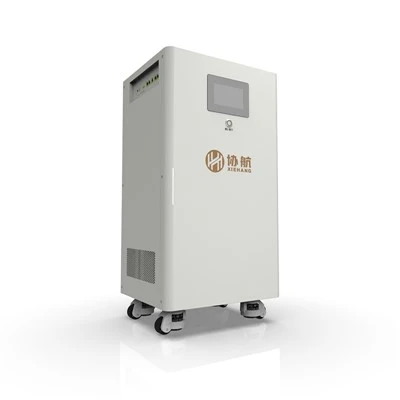
If you’re a hospital facilities director, CFO, or operations manager looking to reduce energy costs, improve outage reliability, and shrink your carbon footprint, let’s connect. We’ve helped hospitals across the country navigate the process of designing and installing solar energy storage systems that fit their specific needs, from small rural clinics to large urban teaching hospitals. We don’t just sell equipment—we work with you every step of the way, from initial site assessment to post-installation support, so you can focus on what matters most: patient care.
Portable Power Station References
- U.S. Energy Information Administration. (2022). Commercial Sector Energy Consumption by End Use. Washington, D.C.
- Centers for Medicare & Medicaid Services. (2023). Solar and Energy Storage for Healthcare Facilities: Outage Reliability and Cost Impacts. Baltimore, MD.
- American Hospital Association. (2022). Energy Costs for U.S. Hospitals: Trends and Implications. Chicago, IL.
- International Energy Agency. (2023). Global Lithium-Ion Battery Cost Report. Paris, France.
- Underwriters Laboratories. (2021). UL 9540A Standard Test Method for Evaluating Thermal Runaway Fire Propagation in Energy Storage Systems. Northbrook, IL.
- U.S. Department of the Treasury. (2022). Inflation Reduction Act: Commercial Clean Energy Tax Credits. Washington, D.C.
Zhejiang Xiehang New Energy Equipment Co., Ltd.
As one of the most professional solar energy storage system manufacturers and suppliers in China, our products have good reputation in the market. Please erst assured to wholesale custom made solar energy storage system from our factory. If you have any enquiry about cooperation, please feel free to email us.
Address: No.5 Hechen Road, Zhouwangmiao Town, Haining, Jiaxing City, Zhejiang Province, China
E-mail: dan.wu@xiehang.net
WebSite: https://www.shineonpower.com/
