Hey there! I’m a supplier of battery boxes, and you might be wondering, "Does a battery box produce heat during operation?" Well, let’s dive right into this topic and shed some light on it. Battery Box

First off, it’s important to understand the basic working principle of a battery box. Inside a battery box, there are multiple batteries, usually connected in series or parallel. These batteries store electrical energy and release it when needed to power various devices. Whether it’s for a small-scale home backup system or a large industrial application, the process of energy conversion is at the heart of how it works.
Now, to answer the question – yes, a battery box does produce heat during operation. But why is that? It all comes down to the internal resistance of the batteries. When current flows through a battery, the internal resistance causes some of the electrical energy to be converted into heat. This is a natural byproduct of the electrochemical reactions happening inside the battery cells.
Let me give you an example to make it clearer. Think of a battery as a water pipe. The electrical current is like the water flowing through the pipe, and the internal resistance is like a narrow section in the pipe. As the water (current) passes through this narrow part, it encounters resistance, and some of the energy is dissipated as heat. In the same way, the electrical current in a battery faces resistance, leading to heat generation.
The amount of heat produced depends on several factors. One of the main factors is the load on the battery box. If you’re using high-power devices that draw a large amount of current from the battery box, more heat will be generated. For instance, if you’re running a power-hungry appliance like an air conditioner or a large electric motor, the battery box will have to work harder, and thus, more heat will be produced.
Another factor is the charging and discharging rate. When you charge a battery box rapidly, it generates more heat compared to slow charging. Similarly, fast discharging also results in increased heat production. This is because higher charging or discharging rates mean more current flowing through the batteries, which in turn increases the heat due to the internal resistance.
The type of batteries used in the battery box also plays a role. Different battery chemistries have different internal resistance characteristics. For example, lead-acid batteries generally have a relatively higher internal resistance compared to lithium-ion batteries. So, for the same load and operating conditions, a battery box with lead-acid batteries might produce more heat than one with lithium-ion batteries.
Temperature also affects heat generation. If the ambient temperature is already high, the battery box will have a harder time dissipating the heat it produces. This can lead to a further increase in the internal temperature of the battery box, which can be a concern. High temperatures can degrade the performance and lifespan of the batteries over time.
So, what do we do to deal with this heat issue? Well, as a battery box supplier, we take several measures to ensure that the heat is managed effectively. One of the common methods is to use cooling systems. These can be passive cooling systems, such as heat sinks and ventilation channels, or active cooling systems like fans or liquid cooling.
Heat sinks are made of materials with high thermal conductivity, like aluminum. They absorb the heat from the batteries and transfer it to the surrounding air. Ventilation channels are designed to allow air to flow through the battery box, carrying away the heat. Fans can be used to increase the airflow, enhancing the cooling effect. Liquid cooling systems, on the other hand, use a coolant to absorb the heat and transfer it to a radiator, where it is dissipated.
In addition to cooling systems, we also design the battery box with proper insulation. Insulation helps to prevent heat from escaping to the surroundings, but more importantly, it also protects the batteries from external heat sources. This helps to maintain a more stable internal temperature for the batteries.
We also monitor the temperature of the battery box during operation. Most of our battery boxes are equipped with temperature sensors that continuously measure the internal temperature. If the temperature exceeds a certain threshold, the system can take corrective actions, such as reducing the charging or discharging rate or activating the cooling system.
Now, you might be thinking about the safety aspects. Heating in a battery box can indeed pose some safety risks if not properly managed. Excessive heat can cause the battery cells to overheat, which can lead to thermal runaway. Thermal runaway is a dangerous situation where the temperature of the battery cells rises uncontrollably, potentially resulting in a fire or an explosion.
But don’t worry! We take safety very seriously. Our battery boxes are designed and tested to meet strict safety standards. We use high-quality components and advanced manufacturing processes to ensure the reliability and safety of our products. In addition to the temperature monitoring and cooling systems, we also incorporate other safety features, such as overcharge protection, over-discharge protection, and short-circuit protection.
So, to sum it up, a battery box does produce heat during operation due to the internal resistance of the batteries. However, with proper design, cooling systems, and safety measures, we can effectively manage the heat and ensure the safe and efficient operation of the battery box.
If you’re in the market for a battery box, whether it’s for a new project or to replace an existing one, we’re here to help. Our battery boxes are designed to provide reliable power storage and are built with the latest technology to handle heat and ensure safety. We offer a wide range of battery box solutions to meet your specific needs, whether it’s for residential, commercial, or industrial applications.
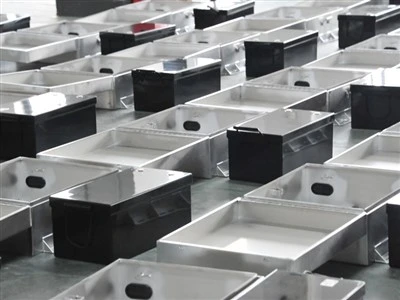
If you’re interested in learning more about our battery boxes or would like to discuss a potential purchase, feel free to reach out. We’re always happy to have a chat and see how we can meet your energy storage requirements.
Wind Vanes References
- Battery Technology Handbook, edited by some battery experts on battery working principles and heat generation.
- Research papers on battery thermal management and safety from well – known academic journals.
Wuhu Qiahao Metal Products Co., Ltd.
As one of the most professional battery box manufacturers and suppliers in China, we warmly welcome you to buy premium battery box made in China here from our factory. All customized products are with high quality and competitive price. Contact us for pricelist.
Address: Building 5, No. 3 Yongtai Road, Wanzhi District, Wuhu City, Anhui Province, China
E-mail: 290418907@qq.com
WebSite: https://www.qiahaometal.com/
