If you’ve ever visited a rural worksite, a small hobby farm, or a landscape job where the “big iron” can’t squeeze into tight spaces, you’ve probably seen a compact tractor quietly pulling its weight. As someone who’s spent the last 12 years supplying compact tractors to small-scale operators, I hear one question more than any other from first-time buyers or renters: Are these machines actually easy to transport? The short answer is yes—but only if you understand the ins and outs of their size, weight, and the logistics that come with moving them from one site to the next. Over the years, I’ve watched customers make avoidable mistakes with transport that add time, extra costs, or even safety risks, so I want to break down this topic like I would for a new customer sitting across my desk. Compact Tractors
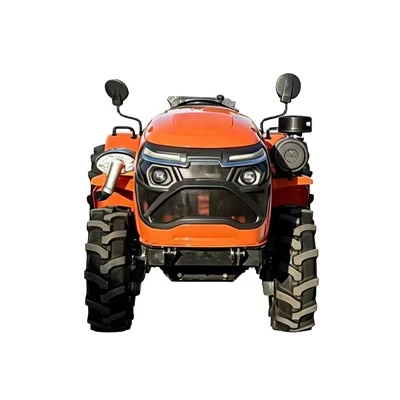
First, let’s get clear on what a compact tractor actually is, because that term means different things to different people. For most suppliers, compact tractors are defined as machines under 40 horsepower, with an overall width of less than 60 inches, and a dry weight (without attachments) between 1,500 and 3,500 pounds. Compare that to a full-size farm tractor, which can weigh 10,000 pounds or more, have a width over 8 feet, and require special permits for most road travel, and the appeal of compact models for transport becomes obvious. A 30-horsepower compact, for example, is small enough to fit through a standard 36-inch gate—something most larger tractors can’t do—and narrow enough to drive down a residential street without the state highway patrol flagging you for oversized load. But ease of transport isn’t just about size; it’s about how that size interacts with what you’re using to move it.
Let’s start with the most common transport method: a standard pickup truck and trailer. If you have a half-ton pickup, like a Ford F-150 or a Chevy Silverado 1500, that’s a great starting point for compact tractor transport—if you pair it with the right trailer. A 5-foot-by-10-foot single-axle utility trailer is the workhorse here, and it’s the setup I recommend to 70% of my first-time buyers. Why? It’s affordable, easy to tow, and doesn’t require a commercial driver’s license (CDL) in most U.S. states. The key here is matching the trailer capacity to the tractor’s weight and the trailer’s Gross Vehicle Weight Rating (GVWR). For example, a 2,500-pound compact tractor plus 500 pounds of pallet forks or a spreader will bring your total load to 3,000 pounds. A single-axle utility trailer with a 3,500-pound GVWR is perfect for that, leaving you enough buffer to avoid overloading your truck or trailer. Overloading is the biggest mistake I see here. A customer once tried to haul a 3,200-pound compact on a single-axle trailer rated at only 2,000 pounds, and half-way to their job site, the trailer’s axle bent, leaving them stranded on a rural backroad. That extra $200 for a 3,500-pound GVWR trailer would have saved them $1,500 in towing repairs and a whole day of lost work.
What if you don’t have a pickup truck? For operators with only an SUV or a van, that’s not a dealbreaker, but it does narrow your options. Most full-size SUVs (like the Toyota Sequoia or the GMC Yukon XL) can handle a compact tractor on a trailer, as long as the trailer is lightweight and the SUV has a towing capacity of at least 5,000 pounds. I don’t recommend trying to load a compact tractor into the bed of a pickup without a trailer, even if you think your truck can hold it. The weight of a compact tractor is concentrated in its front axle and engine, and shifting it around in a truck bed without secure tie-downs is a major safety hazard. Last year, a customer of mine tried to drive a small 2,000-pound tractor into the bed of his half-ton pickup, and when he hit a pothole, the tractor slid forward, crumpling the truck’s cab. It wasn’t cheap to fix, and he missed a week of jobs waiting on parts. Always use a trailer, no exceptions—even if it seems like overkill for small moves.
Another transport factor that’s easy to overlook is road safety and legal requirements. Even compact tractors, when loaded, count as a “vehicle over 10,000 pounds” in some states, but wait—no, actually, most compact tractor loads fall under the “oversized load” umbrella only if their width exceeds 8.5 feet. Since our compact tractors max out at 55 inches (just under 4.6 feet), they’re well under that threshold, so you don’t need special permits in most places. That’s a huge win compared to full-size tractors, which often require a $500 permit per load, police escorts, and restricted travel during peak traffic hours. I always advise customers to check their state’s Department of Transportation (DOT) rules before heading out, just to be safe—some states require load flags on the back of trailers that extend more than 4 feet beyond the truck, but for our compact loads, that’s rarely an issue. Weather also plays a role. Transporting a compact tractor in rain or ice means slower speeds, more stopping distance, and extra care when turning. We always recommend waiting for dry conditions if possible, but if you have to move it in bad weather, use tire chains on the trailer and double-check all tie-downs before you leave.
What about smaller, more frequent moves? If you’re a landscaper bouncing between residential yards, or a hobbyist working on your own property, you might wonder if there’s an even easier way. For short distances (less than 50 miles, within your local area), some operators use a trailer with a ramp that allows one-person loading. That’s a game-changer for solo workers. Our compact tractors come standard with a low-profile deck that makes ramping easy—no heavy lifting required, just make sure your trailer’s ramp is rated for the same weight as the load. I once worked with a landscape crew that transports 3 compact tractors every week between 10 different job sites, and their setup is a single-axle trailer with a split ramp, towed by a diesel half-ton. They pay $30 a month in storage, and spend less than 2 hours a week on transport time, which saves them money on labor. That’s the kind of efficiency we design our compact tractors for.
Of course, no transport is completely without challenges, and compact tractors have their own unique ones. One common issue is ground clearance. If you’re driving a trailer with a low profile over a dirt road with ruts, or a road with speed bumps, the trailer’s frame might scrape the ground, especially if you have attachments on the tractor. The solution is simple: lower your speed, avoid rough terrain when possible, and use a trailer with at least 12 inches of ground clearance. We also add a heavy-duty skid plate to our recommended trailer setups for this exact reason. Another challenge is securing the tractor. Because compact tractors are smaller, they have less surface area to attach tie-downs to, which means you need high-quality straps. I recommend using 4 heavy-duty ratchet straps—two on the front, two on the back—attached to the tractor’s frame (not the fenders or the hood, which are plastic and can break). A customer once used cheap rope to secure their tractor, and on the highway, one of the ropes slipped, and the tractor shifted, almost hitting a passing car. That’s why I always emphasize using rated straps, not rope, and tightening them until the tractor can’t move at all on the trailer.
Now, let’s talk about when compact tractor transport might not be as easy. If you’re planning to haul a compact tractor cross-country, for example, even with all the right equipment, it’s a 6-8 hour trip each way, plus loading and unloading time. That’s a big commitment, and some operators choose to hire a professional transport company for long-distance moves, which can cost between $1.50 and $3 per mile. For example, a 500-mile trip would cost between $750 and $1,500, which is a good chunk of change, but it saves you the hassle of towing a heavy trailer yourself. We work with several professional transport providers that specialize in compact tractors, and we can connect you with them if long-distance transport is what you need.
At the end of the day, the reason compact tractors are easy to transport boils down to their design: they’re built for small spaces, so their transport needs are also small compared to larger machinery. I’ve seen customers use everything from half-ton pickups to small box trucks to move our compact models, as long as they follow the basic rules: match your trailer capacity to your tractor weight, use high-quality tie-downs, check local DOT rules, and plan for weather. The biggest mistake isn’t the size or weight of the tractor—it’s cutting corners on preparation. A little planning before you load up can turn a stressful transport trip into something that takes 15 minutes, not hours.

If you’re in the market for a compact tractor and want to talk through transport options specific to your work, reach out to our team. We don’t just sell tractors—we help you figure out the best way to get them to your job site, no extra stress. Whether you’re a landscaper, a hobby farmer, or a small business owner, we can walk you through the right setup for your needs. Don’t hesitate to get in touch to start the conversation about what works for you.
Compact Tractors References:
- National Agricultural Statistics Service. (2022). Compact Tractor Specifications and Usage for Small-Scale Operations. U.S. Department of Agriculture.
- American Trailer Dealers Association. (2023). Guidelines for Towing Utility Trailers with Compact Machinery. ATDA Safety Standards.
- U.S. Department of Transportation. (2024. State-Specific Oversized Load Regulations for Agricultural Equipment. Federal Motor Carrier Safety Administration.
- Outdoor Power Equipment Institute. (2023). Transport Best Practices for Compact Lawn and Garden Tractors. OPEI Safety Advisory.
- Small Farm Journal. (2022). The Practical Guide to Moving Compact Tractors on Rural and Residential Job Sites. Small Farm Media.
Shandong Jiayuan Agricultural Equipment Co., Ltd.
As one of the most professional compact tractors manufacturers and suppliers in China, we have world-leading production equipment and strong manufacturing capabilities. Please feel free to buy advanced compact tractors for sale here from our factory.
Address: No.2, No.002777 Zhongjiang West 4th Street, Yangzi Subdistrict, Binhai District, Weifang City, Shandong Province, China
E-mail: sdjynyzb@163.com
WebSite: https://www.jiayuantractor.com/
