If you’ve ever worked on infrastructure projects—from highway overpasses to parking garages, or even small-scale concrete retaining walls—you’ve probably heard the term “concrete tie rod” tossed around. But when you’re specifying these critical components for a project, one question comes up again and again, and it’s not just a detail: what is the minimum diameter of a concrete tie rod? As a supplier who’s been matching high-quality concrete tie rods to projects across North America for over 12 years, I can tell you this isn’t a one-size-fits-all answer. It’s a question rooted in engineering standards, site conditions, and the specific load your tie rod will need to handle. Let’s break this down, no stuffy jargon, just real-world know-how I’ve picked up working with structural engineers, general contractors, and DIYers alike. Concrete Tie Rod
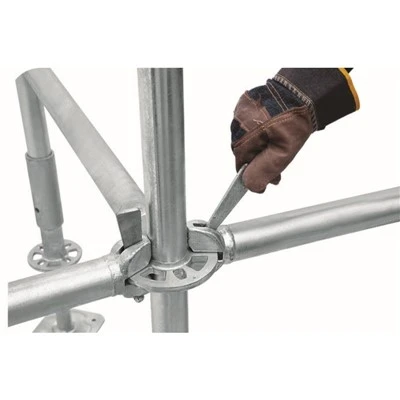
First, let’s get on the same page about what a concrete tie rod does. A concrete tie rod is a threaded steel rod embedded in concrete (or attached to concrete components) to hold two sections of a structure together. Think of a bridge deck’s concrete abutments: they push outward from the weight of traffic, so a tie rod runs between them to pull them tight, preventing gaps or cracking. For a residential retaining wall, tie rods anchored in the backfill keep the concrete panels from leaning or tipping. They’re not fancy, but they’re non-negotiable for structural safety. So undersize a tie rod, and you’re looking at a structural failure down the line—oversize it, and you’re wasting budget on material that doesn’t add any performance value. That’s where the minimum diameter question becomes so important.
The baseline for all concrete tie rod sizing in most of the world is the American Society of Civil Engineers (ASCE) and American Concrete Institute (ACI) standards—specifically ACI 318, the go-to code for concrete structure design and construction. For straight, uncoated carbon steel tie rods (the most common type for standard projects), ACI 318 sets a basic minimum requirement related to tensile strength. Carbon steel tie rods typically have a yield strength of 36,000 psi (Grade 36) or 50,000 psi (Grade 50). For Grade 36 rods, the minimum diameter ACI allows for any structural tie rod is ½ inch (12.7 mm), and for Grade 50 it’s ⅜ inch (9.5 mm). Wait, that seems small, right? But that’s only the absolute minimum for the most basic, low-load applications.
Let’s test that with a real example. A small residential retaining wall in a suburb of Detroit, 4 feet high, with backfill of sand. A structural engineer using Grade 50 steel might spec a ⅜-inch tie rod here, because the lateral load from 4 feet of sand is very low—enough to hold the wall, but not enough to require a thicker rod. But wait a second: that’s only if you’re using standard, full-thread rods, right? If you’re using a rod with partially machined threads (which is a cheap shortcut some suppliers take), the threaded section is thinner than the smooth shank, so you have to size up to compensate. I’ve seen too many projects where a contractor bought a “½-inch” partially threaded rod that only had a ⅜-inch core at the threads, which fails under load. That’s a mistake you don’t want to make, which is why the standard minimum only applies to full-diameter threaded rods.
Now, the absolute minimum is only for super low-load, low-stakes projects. Most commercial, industrial, or even mid-sized residential projects need a larger diameter. Where does that come from? Tensile load calculation. Every tie rod has to handle a calculated working load, which is based on: the height of the structure, the type of backfill (clay is heavier than sand, so more load), seismic activity in your area (California requires thicker rods than Texas, for example), and any additional loads like live traffic for bridge tie rods or wind loads for wall panels.
Let’s take a highway overpass abutment tie rod: 20 feet high, in a Zone 3 seismic area (California), with heavy crushed stone backfill. The working load here would be around 120,000 pounds. If you’re using Grade 50 steel, the tensile strength is 50,000 psi, so the required cross-sectional area is load divided by strength: 120,000 / 50,000 = 2.4 square inches. The formula for the area of a circle is πr², so solving for diameter: d = 2 * sqrt(area/π). For 2.4 square inches, that works out to about 1.75 inches. That’s a far cry from the ⅜-inch minimum. But even here, there’s a catch: corrosion. If the tie rod is embedded in concrete that has a high chloride content (from road salt or coastal exposure), you need a thicker rod or a coated rod to prevent rust. Steel expands when it rusts, and if your rod is too thin, rust can crack the concrete from the inside out. For coastal projects or areas with heavy road salt, we always spec at least a ⅝-inch epoxy-coated rod, even if the calculated load would only need a ½-inch. Corrosion is the silent killer here, and I see it on old projects all the time—tie rods that were sized right for load, but too thin to handle 10 years of salt spray, leading to cracking walls and expensive repairs.
Another factor that most people overlook: the length of the tie rod. A 10-foot-long tie rod will stretch under load, same as a rubber band. The longer the rod, the more it stretches. If you have a long rod, you might need a larger diameter to keep stretch within acceptable limits, even if the load is small. For example, a 20-foot-long tie rod for a parking garage header, holding back a 10-foot concrete wall, with a working load of 10,000 pounds. The calculated diameter from load is ½ inch, but because it’s 20 feet long, it would stretch over ¼ inch under that load—too much for the concrete to handle, leading to visible gaps at the wall joints. So in this case, we size up to ⅝ inch, which cuts stretch to under ⅛ inch, a safe amount. That’s why the minimum diameter can’t be looked at in a vacuum; length, load, environment, all matter.
Now, what about specialty tie rods? Like stainless steel tie rods for food processing facilities or highly corrosive environments? The strength of stainless is lower than carbon steel, so you need a larger diameter. For 304 stainless steel, yield strength is around 30,000 psi, so the minimum diameter would be larger than Grade 50 carbon steel for the same load. I once worked on a project for a brewery in Oregon, where the concrete tie rods were exposed to yeast and acidic cleaning solutions. We used 1-inch 316 stainless steel tie rods, even though the calculated load only needed a ⅝-inch, because the corrosion resistance of stainless requires a thicker cross-section to maintain strength over time.
I’ve had so many contractors come to me asking for the “cheapest tie rod” for a project, and they’re shocked when I tell them they can’t use a ½-inch rod when the engineer spec’d ⅞-inch. Let me tell you a story from three years ago: a general contractor in Chicago called me in a panic, because they had installed ½-inch Grade 36 tie rods for a retaining wall project that was 10 feet high, right along a road that uses a lot of road salt. Two months later, they started noticing vertical cracks in the wall panels. We pulled one rod and it was half-rusted through—chloride had seeped into the concrete, and the thin rod couldn’t resist corrosion. We had to replace all 42 tie rods with ⅞-inch epoxy-coated Grade 50, at a cost that was three times more than the original cheap rods. That’s the mistake of skipping the details. The minimum diameter isn’t a suggestion; it’s a requirement for safety, and cutting corners there will only cost you more down the line.
Wait, but what about smaller projects, like a DIY retaining wall for a backyard? I get that too—homeowners come to me all the time, looking for tie rods for their 3-foot-high garden wall. For that, the ACI minimum is enough: a ⅜-inch Grade 50 rod is perfect, as long as it’s properly embedded in the concrete and the backfill isn’t too heavy. The key there is making sure the rod is anchored properly on both ends, not just sticking out of the concrete. I always give DIY folks a free quick guide on how to install tie rods for small projects, because even the minimum size won’t help if it’s not installed right.
Now, let’s talk about common mistakes I see with tie rod sizing. The first is using partial threads: as I mentioned earlier, a rod labeled as ½-inch might have a smaller core at the threads, which reduces its strength. Always ask your supplier for full-thread rods where the entire length is the same diameter—no tapering at the ends. The second mistake is ignoring environmental factors: not accounting for salt, moisture, or acidic conditions, which eat away at thin rods. The third is going too small to save money, which leads to repairs that cost 10x more. The fourth is not consulting a structural engineer: I can give you general guidelines, but every project is different, and an engineer will calculate the exact load, so you don’t have to guess on minimum diameter.
As a concrete tie rod supplier, my job isn’t just to sell you a rod—it’s to make sure you have the right rod for the job. I’ve had projects where a contractor bought a rod that was too thin, and we worked with them to size it up without making them overspend. I’ve also had projects where the engineer over-specified a rod, and we were able to use a smaller diameter that still met all code requirements, saving them thousands of dollars. It’s all about balance: minimum diameter that meets code, handles the load, and lasts for decades, no more, no less.
So to sum up, the minimum diameter of a concrete tie rod isn’t a static number—it starts at ⅜ inch for low-load, low-environmental-stress applications using Grade 50 full-thread carbon steel, but jumps up to ½ inch, ⅝ inch, or even larger based on load, length, corrosion risk, and project type. Always rely on ACI 318 standards, work with a structural engineer if you’re unsure, and avoid shortcuts like partial threads or cheap coated rods that don’t meet specs.
If you’re working on a concrete structure project and need help figuring out the right tie rod size, or if you’re looking for high-quality, code-compliant concrete tie rods that won’t let you down, reach out to our team to discuss your needs. We’ll walk you through sizing, materials, and installation tips to make sure your project is safe, code-compliant, and built to last.
Scaffoldings References
American Concrete Institute. (2022). Building Code Requirements for Structural Concrete (ACI 318-19).
American Society of Civil Engineers. (2020). Seismic Design Criteria for Concrete Structures (ASCE 7-16).
Portland Cement Association. (2019). Concrete Tie Rod Design and Installation Guidelines.
Rizhao Wellfit Scafform Co., Ltd.
Address: No. 7, Huasheng Road, Taoluo Town Industrial Zoon, Donggang District, Rizhao City
E-mail: sales@wfscafform.com
WebSite: https://www.wfscafform.com/
