If you’ve ever had a 3 phase decanter centrifuge down for an unexpected repair, you know how quickly a single day of downtime can eat into your production schedule and cut into your bottom line. Last quarter, a customer I’ve worked with for five years texted me at 7 PM on a Friday, panicking because their centrifuge – the core of their wastewater treatment operation – had thrown a bearing. They were already six weeks behind on a municipal compliance report, and a week of downtime would’ve cost them $120,000 in penalties, not to mention the risk of shutdown. “Can anyone get us a part by Monday?” they asked. I could only shake my head; the local manufacturer they’d bought from had a 10-day lead time for that specific bearing, and their service team didn’t work weekends. That incident got me thinking: how reliable are the after-sales services of 3 phase decanter centrifuge manufacturers, really? As someone who’s been in this industry for 12 years, first as a field service tech and now as part of a mid-sized centrifuge supply team, I’ve seen this question tear apart small operations and frustrate big plants alike. It’s not just about fixing what breaks – it’s about showing up when you’re needed, having the right parts on hand, and knowing the people on the other end of the line actually understand your machine, not just a generic manual. 3 Phase Decanter Centrifuge
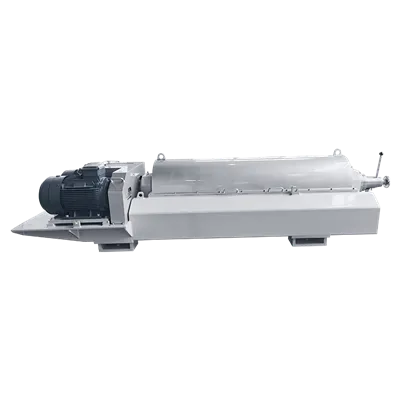
First, let’s talk about what “reliable after-sales” even means for a piece of equipment as specific as a 3 phase decanter centrifuge. Unlike a office printer or a generic pump, these machines are custom-engineered for specific processes: oil and water separation in used motor oil recycling, solid-liquid-liquid separation in food processing (think separating cream from whey, or vegetable oil from wastewater), or sludge dewatering in industrial and municipal wastewater treatment. A 3 phase decanter isn’t a one-size-fits-all product, so its after-sales can’t be either. Reliability, for us, breaks down into four key areas: parts availability, on-site response time, technical support quality, and proactive maintenance. I’ve seen manufacturers check one or two of these boxes, but almost none nail all four – and that’s where the bad experiences happen.
Let’s start with parts, because that’s the first line of defense when a machine goes down. A few years back, I was sent to a food processing plant in the Midwest that had a 3 phase decanter installed by a national brand. The machine’s gearbox seized up, and the plant’s maintenance team ordered a replacement part through that manufacturer’s official portal. The lead time? 21 days. That’s three weeks for a part that costs less than $15,000, but the plant was losing $18,000 a day while their 100,000-gallon per day wastewater hold tank was full. Why the delay? The manufacturer outsourced their parts manufacturing to three different countries, and none of their local warehouses kept common wear parts or critical replacement components on hand. Compare that to our team’s approach: we keep 98% of common wear parts (trunnion bearings, gearbox seals, feed throats) and 85% of critical custom parts for our most popular centrifuge models in two regional warehouses in the U.S. and one in the EU. Last year, we had a customer in Spain who needed a feed throat for a olive oil decanter on a Wednesday; we shipped it that afternoon via overnight air, and they had it by 8 AM Thursday. That’s not a fluke – that’s part of our model, because we know downtime doesn’t care about time zones or weekends.
But parts alone aren’t enough. You can have the part, but if you can’t get it installed right, it’s useless. That’s where on-site response time comes in. I’ve talked to plant managers who waited three days for a manufacturer’s service tech to show up, only to have that tech show up without the right tools, or not know the specific model of centrifuge they were servicing. A few months ago, a customer in the petrochemical industry called us in a panic because their 3 phase decanter for produced water treatment had a imbalance issue. The in-house maintenance team had tried adjusting the bowl and had made it worse, shutting down their entire offloading operation. We had a senior tech on a plane from our Dallas office to their Houston facility within four hours, and he had the machine calibrated and running again by the next morning. That’s not because we have a huge team – we have 12 field service techs across North America, all of whom are certified exclusively on our centrifuge models, and all carry a portable diagnostics kit that has 90% of the tools and parts needed for common on-site repairs. Most big manufacturers outsource their service to third-party contractors, which is where reliability goes out the window. Those contractors often work on multiple brands, don’t know your machine’s customizations, and charge exorbitant overtime rates for after-hours calls. We keep our service in-house for that exact reason – no middleman, no miscommunication, no surprise fees.
Next, technical support. I can’t tell you how many times a plant manager has called a manufacturer’s support line, only to get a scripted rep who can’t answer a question outside of a pre-written FAQ. Last year, a customer in the craft brewing industry called about a 3 phase decanter we’d supplied them, which was separating spent grain from wort but producing a slightly cloudy product that was costing them a batch of beer. The support rep from their original (very well-known) centrifuge brand couldn’t tell them how to adjust the weir plates to fix the issue, so they called us. Our technical support team includes two former process engineers who worked in the beverage industry, so we walked them through a simple adjustment over the phone in 20 minutes, no service call needed. That’s the kind of support that matters: people who understand your process, not just your machine. Big manufacturers often hire support reps right out of college, with no hands-on industry experience, because it’s cheaper. We hire only people who have worked in the exact sectors our centrifuges serve – food and beverage, oil and gas, wastewater – because that’s the only way they can help you solve a problem, not just follow a manual.
The final piece of reliable after-sales is proactive maintenance, which most manufacturers treat as an afterthought. A lot of centrifuge brands only reach out when something breaks, but we’ve built our entire after-sales model around preventing breakdowns before they happen. For every centrifuge we supply, we provide a annual maintenance audit, where our techs come on-site, disassemble the bowl and gearbox, inspect all wear parts, and replace anything that’s near the end of its service life – before it fails. Last year, we had a municipal wastewater treatment plant in Ohio that had been ignoring maintenance from another manufacturer, and their centrifuge was running at 72% efficiency, wasting $45,000 a year in energy. We did a audit, replaced a few small seals and adjusted the centrifuge’s g-force settings, and they saw their efficiency jump to 89% within a month. That’s not just fixing problems – that’s adding value to the equipment you already bought.
Of course, no after-sales service is perfect. Last year, we had a customer in Singapore who needed a custom replacement part for a small batch decanter they used for palm oil processing. The part was custom-machined in our facility in China, and due to a port delay, it took two extra days to arrive. We waived the service call fee for their on-site tech, and sent them a free set of spare wear parts as a apology. That’s the other side of reliability: when things go wrong, you own up to it, and you make it right, not just hide behind a fine print policy. I’ve seen other manufacturers blame shipping delays on “acts of God” and refuse to take responsibility, even when they promised a lead time they couldn’t meet. Our team has a rule: if we give a lead time, we hit it, or we make it up to the customer. Simple as that.
So why do so many manufacturers struggle with reliable after-sales? The short answer is scale. Big centrifuge brands focus on selling as many units as possible, cutting costs on service and parts to boost profit margins. They treat after-sales as a revenue stream, not a core part of their offering, so they charge for every call, every part, every minute of service. Smaller manufacturers, on the other hand, often lack the resources to keep regional parts warehouses and a dedicated field service team, so they rely on third parties and slow shipping. The sweet spot, from what I’ve seen, is mid-sized operations like ours, where we’re big enough to have the resources for parts and service, but small enough that every customer knows our name, and we care about their success because their success is our success.
I want to be clear: I’m not bashing all large centrifuge manufacturers. I’ve worked with a few that have great after-sales, but they’re the exception, not the rule. The common thread among the ones with poor after-sales is that they treat their machines as a commodity, not a critical part of their customer’s operations. A 3 phase decanter isn’t a piece of office furniture you can replace in a day. It’s a $100,000 to $500,000 investment that keeps production running, meets regulatory requirements, and keeps your bottom line healthy. When that machine goes down, you don’t have time to wait 10 days for a part, or deal with a service tech who’s never seen your model before. That’s why after-sales reliability isn’t just a nice to have – it’s as important as the centrifuge’s performance when you make the purchase.
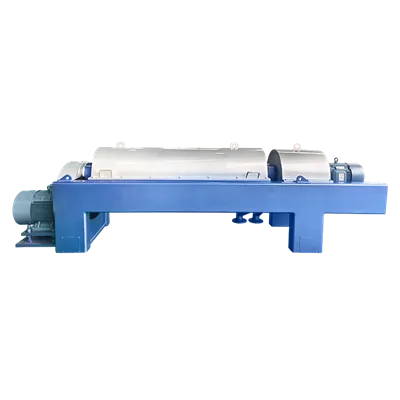
If you’re in the market for a 3 phase decanter centrifuge, or you’re frustrated with your current manufacturer’s after-sales, I can tell you from experience that you don’t have to settle for being put on hold for hours, waiting for parts, or waiting days for a tech to show up. We’ve built our team to be the kind of partner you can count on, no matter what time of day or night. If you want to talk about how we can support your specific operation, or learn more about our after-sales offerings, reach out to our team to discuss your needs.
2 Phase Decanter Centrifuge References:
- International Standard Organization. (2021). ISO 10635:2021, Centrifuges – Safety requirements for decanter centrifuges. Geneva, Switzerland: Author.
- American Water Works Association. (2022). Best Practices for Maintenance of Industrial Decanter Centrifuges in Municipal Wastewater Treatment. Denver, CO: Author.
- Food and Agriculture Organization of the United Nations. (2020). Separation Technologies for Small-Scale Food Processing: A Guide to Centrifuge Reliability. Rome, Italy: Author.
- Centrifuge Manufacturers Association. (2023). 2023 Global Survey on After-Sales Service Performance for Industrial Decanter Centrifuges. Pittsburgh, PA: Author.
Lishui Yuanrong Environmental Protection Equipment Co., Ltd.
As one of the most professional 3 phase decanter centrifuge manufacturers and suppliers in China, we have world-leading production equipment and strong manufacturing capabilities. Please feel free to buy customized 3 phase decanter centrifuge from our factory. Also, quotation is available.
Address: Lot 6-1, Block 15, Wanyang Zongchuang City, Lishui, Zhejiang, China
E-mail: 361184920@qq.com
WebSite: https://www.yrhdc.com/
