When I first started out selling braised pork belly (yes, the kind that’s fall-apart tender, glistening with that sweet-savory glaze, and so juicy it melts on your tongue), I thought marinating was just about dumping a bunch of soy sauce and sugar into a bowl and calling it a day. Boy, was I wrong. Early on, I’d get notes from customers saying their pork came out too salty, or it had that weird “raw” porky aftertaste, or the texture was chewy instead of the silkiness they expected. After months of trial and error, testing different ratios, cooking methods, and even geeking out over the science of how meat absorbs flavors, I’ve nailed down the marinate process that works for us—and keeps our regulars coming back. As someone who supplies braised pork belly to restaurants, grocery stores, and even home cooks across the region, this isn’t just a “recipe” I’m sharing—it’s the exact marinate we use every single day in our kitchen. Let’s break it down, no fancy jargon, just what actually works. Braised Pork Belly
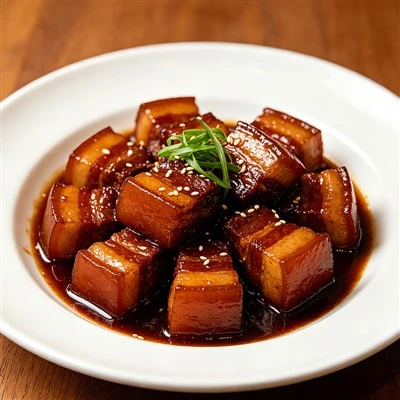
First off, let’s talk basics: pork belly is different from other cuts. It’s got layers of fat and lean meat, right? So marinating it isn’t just about adding flavor—it’s about tenderizing those tough muscle fibers, balancing the richness of the fat, and making sure every bite has that perfect sweet-savory-gingery kick. If you skip the marinate, or do it wrong, you’ll end up with a bland block of fatty meat that’s way too chewy. Trust me, I’ve been there. I once rushed a batch because we had a big catering order, only to get a dozen texts from clients saying it was so tough they couldn’t cut it with a fork. That’s the mistake you don’t want to make.
So what’s the best way to marinate? Let’s start with the ingredients, because not all sauces are created equal. I see a lot of recipes calling for random stuff like Worcestershire or balsamic, and while that works for some pork dishes, braised pork belly needs flavors that stand up to slow cooking without overpowering it. Our core marinate is simple, but each ingredient serves a purpose. Let’s list them, and explain why we use what we do:
Soy sauce is the backbone, but not just any soy sauce. We use a low-sodium light soy sauce, not the dark stuff you’d use for stir-fry. Dark soy is way too thick and will make your pork overly dark and salty—light soy gives you that deep umami kick without the extra salt. We add a splash of dark soy, though, just for a hint of color (that rich amber glaze we all love) but only a tiny bit, like a tablespoon for a 10-pound batch.
Sweetener is next, and here’s the thing: we use a mix of brown sugar and a little honey. Brown sugar caramelizes nicely during braising, gives that depth of sweetness, and also helps tenderize the meat. Honey adds a subtle floral note that cuts through the pork’s richness, instead of being just plain sugary. No white granulated sugar here—it just doesn’t have that same depth. We go for a 3:1 ratio of brown sugar to honey, so if you’re doing a test batch, 3 tbsp brown sugar, 1 tbsp honey works.
Acid is non-negotiable. If you skip acid, your pork will taste flat. We use rice vinegar, not white vinegar—white vinegar is too sharp and will make your pork tangy instead of bright. Rice vinegar is mild, balances the salt and sugar, and also helps break down the muscle fibers a little, which makes the meat softer. That’s the science part, right? Acid denatures protein, so it tenderizes. We use about 2 tbsp for a 5-pound batch of pork belly.
Aromatics are where the flavor really comes alive. Garlic, ginger, and a hint of Chinese five-spice powder. Wait, five-spice is optional but trust me, it’s a game-changer. It has cinnamon, cloves, star anise, Sichuan pepper, and fennel—warm, aromatic notes that pair perfectly with pork. We don’t use too much, just 1 tsp for a 5-pound batch, because you don’t want it to overpower. Garlic: 5-6 minced cloves, not too fine, so you don’t end up with bitter garlic bits. Ginger: 2-inch piece, grated, not sliced—sliced ginger can get tough when braised, grated melts into the marinate.
Wait, what about water? No, we don’t add water to the raw marinate. The pork belly releases its own juices once it starts to sit, so adding water dilutes the flavors. Good marinate should coat the pork, not drown it.
Now, the most important part: how to apply the marinate, and how long to let it sit. I see so many people just toss the pork into the marinate and leave it for an hour, and that’s it. For our pork belly, that’s not enough. We marinate for at least 12 hours, and up to 24 hours in the fridge. Here’s why: pork belly is dense, with those layers of fat and lean. Flavors don’t absorb that fast. If you only marinate for an hour, you’ll only get flavor on the surface—inside the meat, it’s still pretty plain. But 12 to 24 hours? The acid and the salt from the soy start breaking down the outer layers of the meat, so the sweet, savory, gingery flavors seep all the way into every bite. We tested this once: marinated half a batch for 2 hours, half for 20 hours. The 20-hour batch was way more flavorful, and the meat was more tender. The 2-hour one was just okay. Also, always marinate in the fridge, not on the counter. Bacteria grows fast on raw meat, even if it’s in sauce. Fridge keeps it safe, and the slow, cold marinate actually helps the flavors penetrate better than a warm one—no, you don’t want to marinate at room temp, that’s a food safety risk.
Another pro tip for our process: when you prepare the pork belly for marinating, you want to pat it dry first. Raw pork has moisture on the surface, which will thin out your marinate. Pat it with paper towels until it’s dry, then rub the marinate all over every inch—flip it over, rub the sides, the ends, all the little crevices. We even use a little of the marinate to coat the top once we’ve put it in a container, so it’s fully covered, not sitting in a pool of sauce. Wait, but don’t let it sit in a big pool of marinate, either. If you have too much extra marinate, you can use it later when braising, but coating the pork itself is the goal.
Let’s talk about common mistakes we see people (and even some new home cooks we supply to) make with marinating braised pork belly. First, using too much salt. If you use dark soy sauce or extra light soy, your pork will come out way too salty, even after marinating. We use low-sodium light soy for a reason—you can always add a little more if needed, but you can’t take it away. Second, marinating too short. I get it, you’re busy, you want to make dinner fast. But braised pork belly is a dish that’s worth the wait. A quick marinade = bland pork. Third, not grating the ginger or mincing the garlic fine enough. Big chunks of ginger can get tough, and raw garlic can have that sharp, biting taste that ruins the entire dish. Fourth, skipping the acid. Seriously, if you leave out the rice vinegar, your pork will taste flat, like just fatty meat and sugar. The acid cuts through the richness, balances all the flavors, and helps tenderize.
Wait, what about if you’re in a pinch? We get a lot of last-minute orders for catered events, and sometimes we can’t marinate for 24 hours. Can you do it faster? Yeah, we’ve tested that. If you only have 2 hours, you can poke the pork belly all over with a fork—tiny little holes, not deep ones—to help the flavors seep in. That works. But it’s not as good as the 12+ hour marinate, and it’s definitely not for premium batches we sell to our regular restaurant clients. The fork trick is a backup, not the go-to.
Also, when we marinate in our kitchen, we use food-grade plastic containers, not metal ones. Metal can react with the acid in the marinate, giving it a weird metallic taste, and we don’t want that. Glass or BPA-free plastic is the way to go. We also flip the pork belly halfway through the marinate time, around 6 hours, so both sides get equal flavor. That’s another small step that makes a big difference—no more one side being more flavorful than the other.
Let’s get back to the science part, because I know a lot of people love that. Pork belly’s muscle fibers are made of protein, right? When you marinate, the salt from soy sauce and the acid from rice vinegar break down those protein strands, which means the meat gets more tender, and more able to hold onto the flavors instead of just having them sit on the surface. The sugar from brown sugar and honey doesn’t just add sweetness—during the braising process, it caramelizes, creating that sticky, glistening glaze everyone goes crazy for. The aromatics (garlic, ginger, five-spice) are volatile, so over time, they infuse into every layer of the meat, instead of just smelling good on top. That’s why a long marinate isn’t just a “hack”—it’s actually the best way to get deep, even flavor and tender texture.
Here’s exactly what we do in our kitchen for a 10-pound batch of pork belly (that’s enough for about 20 servings, for reference):
- 2 cups low-sodium light soy sauce
- ⅔ cup packed brown sugar (light brown, not dark, for mild sweetness)
- ⅓ cup raw honey (local is fine, any kind works)
- ¼ cup rice vinegar
- 10 cloves garlic, minced finely
- 4-inch piece ginger, grated (use a box grater, the small hole side)
- 2 tsp Chinese five-spice powder
- 1 tbsp black pepper (crushed, not fine)
First, mix all those ingredients in a big bowl until the sugar and honey are fully dissolved. Then, take the pork belly, cut it into chunks about 2 pounds each (easier to handle), pat each chunk dry with paper towels, then rub every single side with the marinate. Put the chunks into a big glass container, pour any extra marinate over the top, cover tightly, and put in the fridge. Let it sit for 12 to 24 hours, flipping the chunks over once at the 6-hour mark. That’s it. No extra steps, no fancy tools.
Now, if you’re a home cook, don’t feel like you have to make a huge batch. Half that recipe works for 5 pounds of pork belly, which is perfect for a family dinner. We even sell pre-marinated pork belly for home cooks, using this exact process, because we know how much time it saves. But if you want to do it yourself, that’s the recipe we use.
Another thing to note: when you’re ready to braise, don’t dump the whole container of marinate into the pot. Save about a cup of the marinate to use during braising, because the marinate that’s been sitting with the raw pork has a little extra moisture, and if you put all of it in, the braising liquid will be too thin. We pour off most of the marinate, use a cup, and the rest gets tossed (or, if it’s extra clean, we save it for marinating other pork cuts, but usually it’s fine to toss). That’s a small detail that makes the glaze thicker and more flavorful, instead of watery.
I know a lot of suppliers cut corners on marinating to save time, but that’s why our braised pork belly stands out. Customers don’t just buy it for the taste—they buy it because it’s consistently tender, flavorful, and every bite is perfect. The marinate is the foundation of that. You can use the best cooking method, slow cook it for hours, but if the marinate is off, it’s all for nothing.
If you’re a restaurant owner, a caterer, or even a grocery store looking for a reliable supplier of high-quality, consistently delicious braised pork belly, this is the process we follow every single day. We source our pork belly from trusted local farms, marinate it using this time-tested method, and deliver fresh or frozen batches to your location on schedule. No cutting corners, no frozen pre-marinated junk that tastes like cardboard—just the same marinate I started using years ago, when I was testing batches in my garage kitchen before I had a proper shop.
Wait, one last common mistake: don’t add anything extra to the marinate that doesn’t belong. I’ve seen recipes add things like oyster sauce, which is great for some dishes, but oyster sauce is too salty and fishy for braised pork belly. Or lemon juice, which is too sharp and will make the pork taste sour. Stick to the simple, core ingredients we use—they’re balanced, they work with pork, and they won’t overpower the meat.
At the end of the day, marinating braised pork belly is a mix of technique, patience, and knowing what flavors work with this specific cut. It’s not about throwing a bunch of random sauces together—it’s about balancing salt, sweet, acid, and aroma, then giving the flavors time to penetrate deep. That’s why our pork belly is the go-to for so many businesses in the area, and why home cooks who buy our pre-marinated stuff keep coming back.
If you’re interested in ordering braised pork belly for your business, or want to learn more about our process, get in touch with our team to chat about your needs. We can work with you on bulk orders, custom packaging, and making sure we deliver exactly what you’re looking for. No hidden fees, no runaround—just good pork belly and good service.
Braised Beef References:
- McGee, H. (2004). On Food and Cooking: The Science and Lore of the Kitchen. Scribner.
- Huang, T. T. (2018). Chinese Home Cooking: Flavors of the Hearth. Tuttle Publishing.
- Food and Agriculture Organization of the United Nations. (2019). Meat Marination Techniques for Improved Quality and Safety. FAO Animal Production and Health Paper.
- Corriher, S. O. (2008). CookWise: The Hows and Whys of Successful Cooking. William Morrow.
Yangzhou Jingsheng Food Co., Ltd.
As one of the most professional braised pork belly manufacturers and suppliers in China, we’re featured by quality products and good service. Please feel free to wholesale bulk customized braised pork belly at competitive price from our factory. Welcome to contact us for quotation and free sample.
Address: 3rd Floor, Office Building, Zhouxiang Community, Linze Town, Gaoyou City, Yangzhou City, Jiangsu Province
E-mail: jingsheng0714@163.com
WebSite: https://www.jingshengfood.com/
