Hey everyone, if you’ve ever ordered electronic components, semiconductors, or tiny parts like resistors or LEDs, you’ve definitely seen those little plastic reels they come on. I’m [Your Name], and I’ve been supplying plastic reels to manufacturers, tech startups, and PCB assemblers for over 10 years. One question I get all the time, more than anything else, isn’t just “how do these reels work” — it’s “are they even safe?” Because when you’re dealing with parts that cost hundreds, even thousands of dollars, the last thing you want is a reel that ruins your inventory or creates a workplace hazard. Plastic Reel
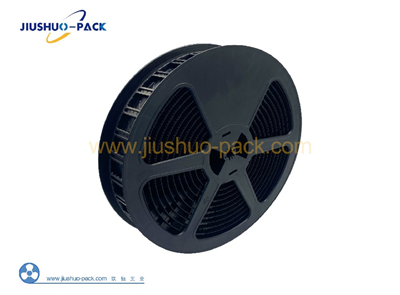
Today I’m breaking down the actual safety features of the plastic reels we supply, no boring textbook stuff, just real stuff I’ve tested and seen save companies from headaches. Let’s start with the most obvious one: static control. If you’ve been in electronics manufacturing before, you know static electricity is the enemy. A tiny zap you can barely feel can blow up a microchip faster than you can blink. So not all plastic reels are the same — the safe ones aren’t just regular plastic. We make ours from static-dissipative (ESD-safe) plastic, not the flimsy stuff you get from no-name suppliers. The material lets small static charges bleed off slowly, instead of building up to a zap that fries parts. I’ve seen a customer switch from cheap, unmarked reels to ours and cut their component damage by 70% in one month. That’s not a number I pulled out of thin air; I was there when their quality team ran the tests.
Next up: strength and impact resistance. You don’t want a reel breaking mid-line, right? Imagine running a high-speed pick-and-place machine, and suddenly the reel shatters. That stops production dead, costs you thousands in downtime, and could even hurt someone if the plastic shatters. Our reels are made from high-grade polypropylene (PP) that’s been formulated to take a hit — I’ve dropped a full 12” reel from 6 feet onto concrete just to test it, no cracks, no pieces flying off. A lot of cheap reels use recycled plastic that’s brittle; they’ll look fine on the shelf but shatter the second they get jostled in shipping or knocked over on the factory floor. We also add extra ribs to the flanges, so even if you stack 10 reels high, the bottom ones don’t crumple.
Wait, and speaking of stacking, there’s also compatibility with automated equipment. A reel that doesn’t fit right on a pick-and-place machine isn’t just inconvenient — it’s a safety hazard. If the reel wobbles or gets stuck, that can make the machine jam, which is a big risk for damage to the machine itself, and even for operator injury if they have to pry it loose. We design our reels to exact industry standards (IEC, JEDEC) so they fit every major brand of SMT machine: Siemens, Yamaha, Panasonic, you name it. I’ve had a customer tell me they stopped having to reset their line 2-3 times a week after switching to our reels. That’s not just safer for the equipment, it’s safer for the people running it, because they’re not rushing to fix jams and risking accidents.
Another big one: chemical resistance. A lot of manufacturing environments have chemicals — cleaning solvents, flux, even humidity control systems. If a reel dissolves or degrades when it gets exposed to these, the parts fall off, get damaged, or get contaminated. We test our reels in a bunch of common industrial chemicals: isopropyl alcohol, flux residue, even mild acids used in PCB cleaning. They don’t warp, they don’t leave residue on the parts, and they don’t break down over time. I once had a customer working in a medical device plant who told me their old reels would get sticky and leave a film on insulin pump parts; since switching to ours, that’s stopped entirely. Medical parts can’t have any foreign residue, so that’s a huge safety thing — not just for the product, but for patients at the end of the line.
Oh, and don’t forget about food-grade options, if you’re working with parts that go into food packaging or medical devices that touch skin. A lot of people don’t realize that regular plastic can leach chemicals when it’s exposed to certain conditions. We offer food-contact-grade PP reels that meet FDA standards, so if you’re assembling parts for food processing equipment, or even something as simple as disposable medical tools, you don’t have to worry about any chemicals transferring from the reel to the product. That’s not a “nice-to-have” — it’s a legal requirement in a lot of cases, so that safety feature isn’t just for your plant, it’s for compliance.
What about shipping safety? I see so many companies get hurt when reels shift during transit, or even when they’re being loaded and unloaded. Our reels have a uniform inner core that works with reel holders, so they don’t spin loose when you’re pulling parts off. We also use specific wall thicknesses that make them rigid enough to stack without adding extra weight (since you don’t want to pay for shipping air). I’ve had a customer that ships reels cross-country, and before they used our stuff, they’d get a dozen broken or warped reels every shipment. Now it’s less than 1%. That saves them on replacement costs, but also means less waste in their warehouse, which is safer for the environment too.
Wait, and one thing a lot of people don’t think about: recyclability. A lot of factories go through thousands of reels a year, and if they’re not recyclable, that’s a safety hazard in terms of waste management. If you’re throwing broken plastic reels into a landfill, they’re just sitting there for hundreds of years, but our reels are fully recyclable PP. We also encourage customers to send back empty reels for us to reprocess, which reduces waste and means less plastic ending up in landfills. That’s a long-term safety feature that a lot of suppliers skip, but it matters more every year.
But let’s be real — I know some of you are thinking, “Yeah, but are these reels really that different from the ones I can buy on Alibaba for half the price?” Let me tell you, I’ve tested those cheap reels. A $20 reel from a random supplier vs. our $25 reel — our reel is stronger, static-dissipative, fits better, and lasts longer. The cheap one might save you $5, but if it ruins $1000 worth of parts or stops your line for 3 hours, that’s a loss you’ll never make up. And safety? Those cheap reels often aren’t ESD-rated at all, so even if they say they are, it’s just printed on a sticker that comes off after one wash or a little heat. We test every batch before it ships, so you know exactly what you’re getting.
I also want to address something else: operator safety. A lot of the reels I see from no-name suppliers have sharp edges. When you’re pulling a reel off a shelf or loading it into a machine, a sharp edge can cut your hand. We deburr every edge during manufacturing, so there are no sharp corners or rough spots. That’s a tiny thing, but if you’re loading 100 reels a day, that adds up to less risk of cuts or injuries. Small safety features add up big time for your team.
So why does this matter? For starters, if your parts get damaged, you’re losing money, missing deadlines, and risking your customer’s trust. But more than that, safety isn’t just about avoiding accidents — it’s about protecting your people, your product, and your bottom line. I’ve been doing this long enough to know that a lot of manufacturers cut corners on packaging to save a buck, but that’s a mistake. The right plastic reel isn’t just a place to hold parts — it’s part of your quality control and safety process.

If you’re tired of reels that break, damage your inventory, or create safety hazards in your plant, I’d love to chat. We can send you free samples, run custom tests for your specific parts, or just answer any questions you have about our reels. Whether you’re a small startup or a large corporation, we can work with your needs. Don’t wait until a broken reel stops your line or ruins a batch of parts — reach out and let’s talk.
Paper Carrier Tape References:
JEDEC Solid State Technology Association. (2020). Standard for Electronic Packaging Materials and Components – Reel Standards.
International Electrotechnical Commission (IEC). (2019). IEC 60068-2-78: Environmental Testing for Electrical and Electronic Equipment – Part 2-78: Tests – Test Cab: Damp Heat, Steady State.
U.S. Food and Drug Administration (FDA). (2021). Food Contact Notifications (FCNs) for Polypropylene Plastics.
Electronic Industries Alliance (EIA). (2018). EIA-481: Standard for Carrier Tapes, Reels, and Other Packaging for Surface Mount Devices.
Dongguan Jiushuo Industrial Co., Ltd.
As one of the most professional plastic reel manufacturers and suppliers in China, we also support customized service. Please feel free to buy high quality plastic reel made in China here from our factory. Contact us for more details.
Address: 11th Floor, Building 2, Chuangfu Center, Chashan Town, Dongguan City, Guangdong Province, China
E-mail: sales06@zaidaiw.com
WebSite: https://www.carriertape-pack.com/
